
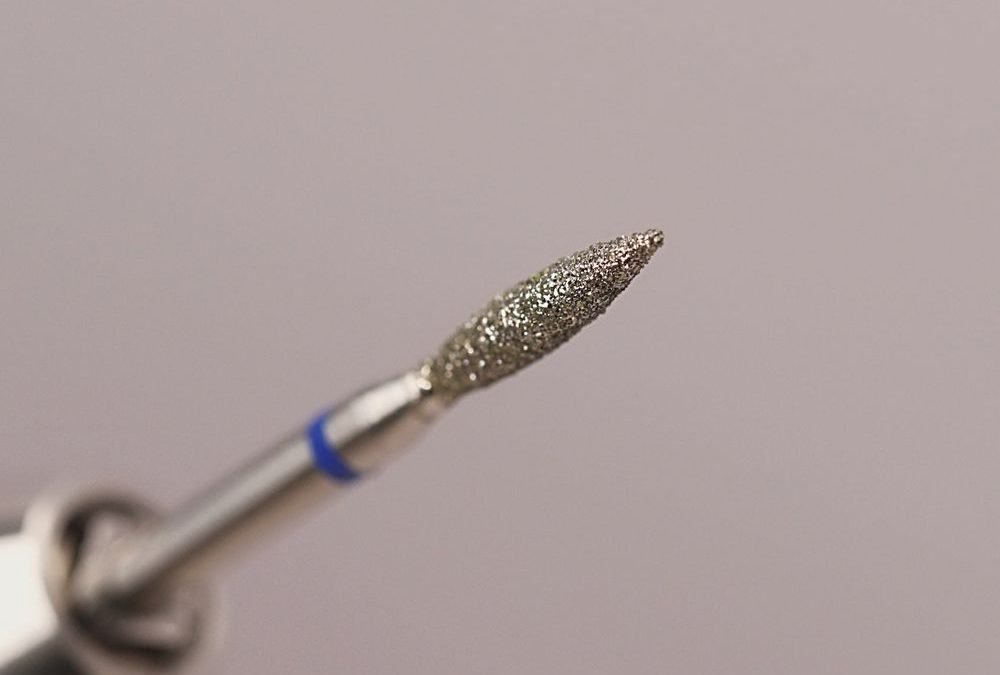
It’s spring workshop season and our tables fill with students learning small, exact moves. When you plan to buy Flame (Medium Grit) Russian manicure bits in larger packs, think beyond price. We focus on how the metallic-silver shaft and sparkly medium/coarse diamond head change the way you hold the tool and how that affects comfort, control, and consistency across many clients.
Position your hand for steady control
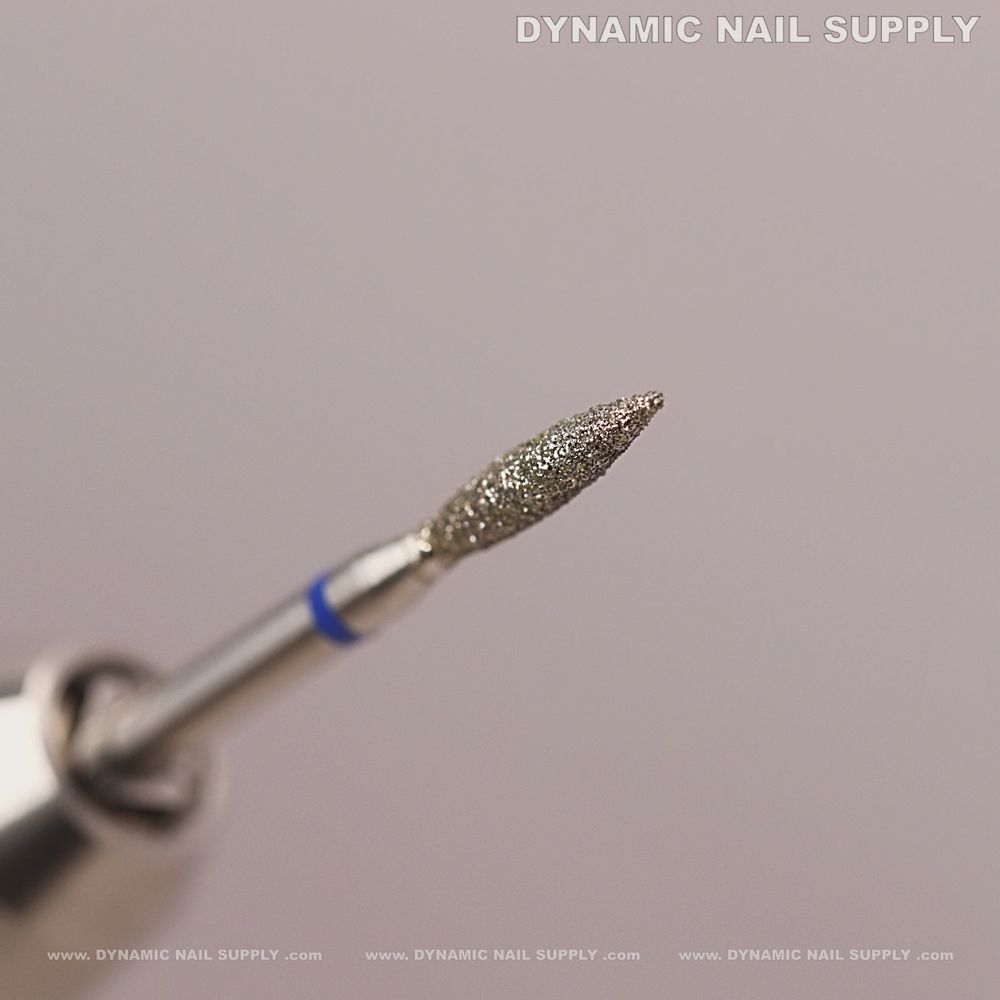
Pointed flame bit for precise cuticle prep
We teach nail students a neutral wrist and a light tripod hold. Rest your little finger or side of your palm on the table to steady the hand holding the handpiece. Hold the mandrel like a pencil between thumb, index, and middle finger — not too tight. The Flame Cuticle Bit’s pointed flame shape needs small, guided movements; a light, precise grip keeps the bit from digging or skipping.
For the metallic-silver shaft, keep the bit close to the web space of your thumb and index finger so the shaft sits against soft skin rather than just the fingertip. This gives micro-adjustment control when you need to hover around the cuticle.
Use the royal-blue band as an alignment guide
The small royal-blue band on the shaft is more than a color cue. We use it as a visual alignment reference when bulk-stocking and training. Line the band up with your thumb pad so you have the same bit depth and sightline every time. This is especially useful in a pack of identical Flame (Medium Grit) bits — students quickly learn to set the band in the same place and reproduce the same hand placement from client to client.
Start each service by checking alignment at low speed and make tiny adjustments until the band is consistently where you like it. This habit reduces overreach and keeps strokes short and safe.
Match RPMs to the medium/coarse diamond grit
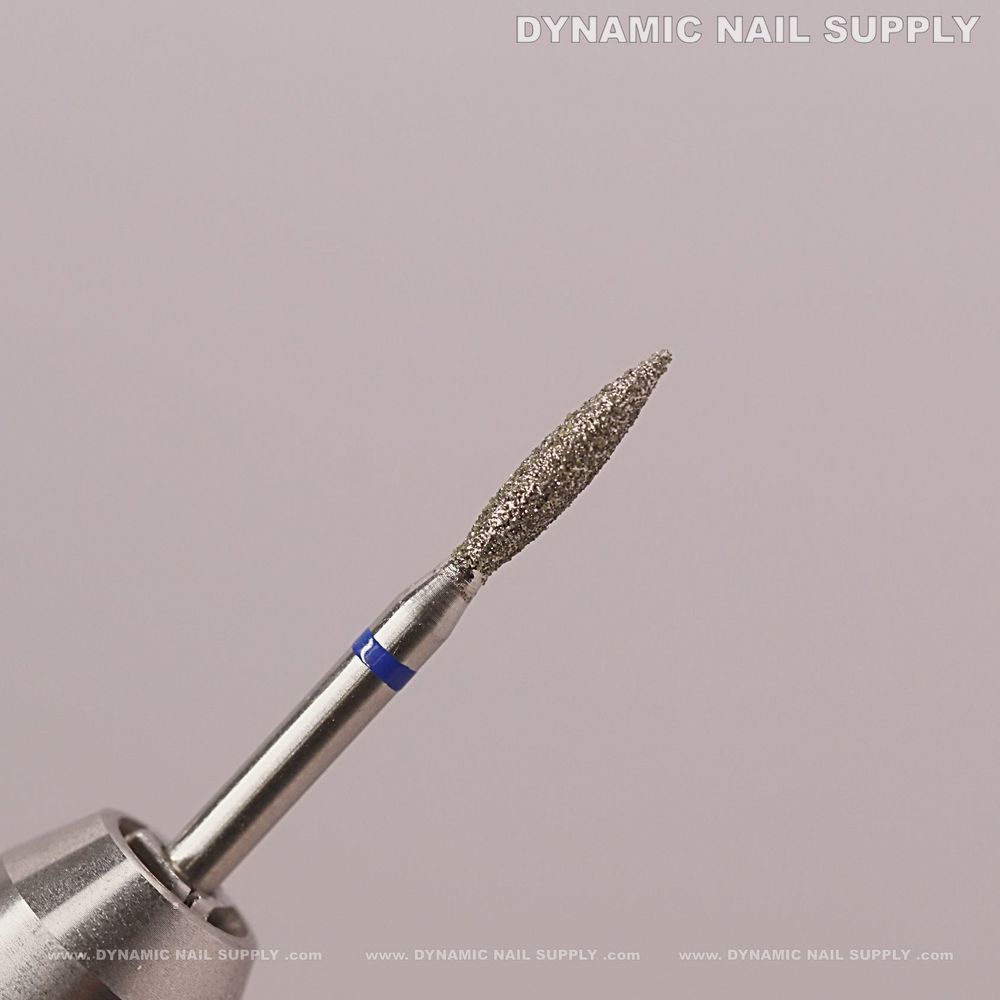
Blue band aligns grip and depth
Set your handpiece to the recommended range of 10k–15k rpm. The visible medium/coarse grit on this flame bit removes dead skin efficiently but needs a steady hand to avoid taking too much. We tell students: lower RPM for tighter control on thin cuticle areas and slightly higher toward thicker sidewalls, still staying within the 10k–15k range.
Practice slow, light passes first. The bit’s sparkly, rough texture can feel aggressive if you push hard or use too high an RPM. Combining the right speed with a soft grip produces a super smooth finish around the cuticle.
Adjust finger rests for less tech fatigue
Fatigue comes from tension and unsupported fingers. Change finger rests often during a service: move from using your pinky on the table to a knuckle rest on the client’s hand or nail form. Rotate your wrist slightly every few nails to shift pressure points. For students using the Flame (Medium Grit) bit in bulk training sessions, alternating rests keeps the grip consistent through long practice runs.
- Use the client’s fingers as a support when possible.
- Switch which finger rests on your workstation every 3–4 nails.
- Keep shoulders relaxed and breathe between strokes.
Train ambidextrous strokes and bidirectional use
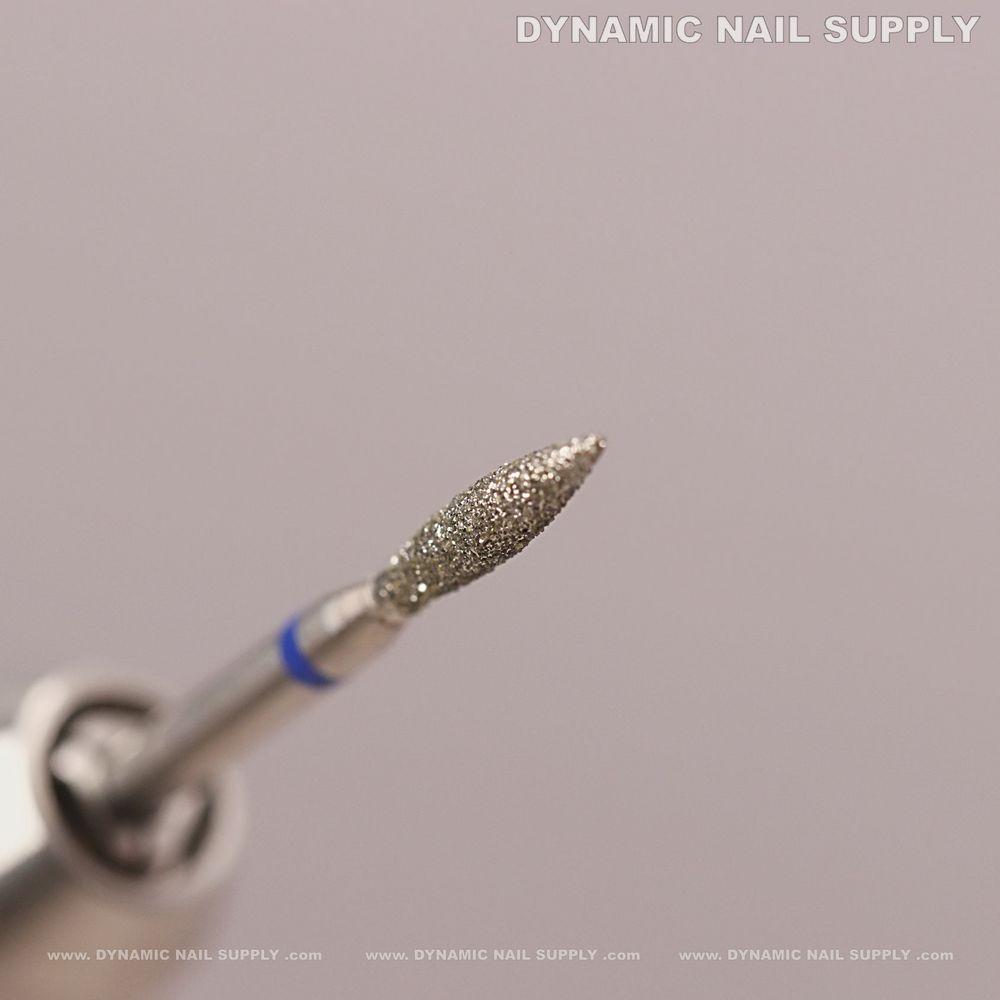
Sparkly medium grit for dead-skin removal
This flame-style bit works clockwise and counter-clockwise, which helps in bulk classes where left- and right-handed students swap stations. Teach both hands to perform short, controlled strokes rather than long sweeping motions. Shorter strokes reduce the chance of overheating and lower the risk of compressing skin.
When you buy multiple Flame (Medium Grit) bits, label a few for left-hand drills and a few for right-hand drills during practice so students learn to feel the difference in rotation and hand pressure.
Plan storage, rotation, and consistency when buying bulk
Buying several of these flame bits is smart for classes and busy studios, but storage and rotation matter. Store bits upright in a padded case or labeled block so the royal-blue band faces the same way for easy grabbing. Rotate stock by date: use the bits bought first for daily training and keep newer ones sealed for client work.
Keep a small practice set separated from the client-ready set. This prevents cross-use and helps maintain consistent grit performance across client services.
Label kits and teach uniform technique
Create a simple label on each bit slot with the target RPM and preferred grip position. When students open a kit and see the same note, they reproduce the same nail drill grip technique every time. Consistency in hand position, alignment of the blue band, and RPM produces repeatable results and reduces mistakes in bulk training.
Quick reference for in-class setup: place the flame bit in the handpiece, line the blue band with the thumb pad, pick an RPM between 10k–15k, rest the pinky on the table, and use light tripod pressure.
When you want to check the specific item or quantities we recommend for courses, consider this link to review the tool and options we compare in class:
Flame Cuticle Bit (Medium Grit)
Keep hygiene and safety front and center
Only use the extra-fine nature of the flame bit for surface dead-skin work; avoid pressing into inflamed or broken skin. Clean and sterilize according to your school or salon rules. Replace bits that show visible wear or rounded grit — they won’t cut cleanly and can cause dragging. Use protective eyewear for clients and techs during bulk practice sessions to catch dust.
Buy variants and price-check for training needs
When buying in bulk for students, pick a mix of identical Medium Grit flame bits so everyone learns on the same tool. We keep a few backups for tests and demonstrations. The listed price is $6.98 each but prices may change, so check current costs before ordering large quantities.
Short FAQ
- How tight should our grip be? Light. Think of holding a pencil for long writing, not squeezing a hammer.
- Which hand should rest on the table? Whichever gives the most steady support — change it often.
- Can students share bits during class? Use practice-only bits for sharing and keep client-ready bits separate.
- What RPM is safest for learners? Start toward 10k and move up as control improves.
We teach students to treat every bit like a precision pen: alignment, light pressure, and short strokes win the day.
Recap checklist
- Use a light tripod hold and frequent finger rests to cut fatigue.
- Line the royal-blue band with your thumb pad for consistent alignment.
- Keep RPM in 10k–15k; start lower during learning.
- Store and rotate bulk bits so training and client kits stay separate.
- Follow hygiene and replace worn bits promptly.